Art therapy in Minsk: painting beats stress
Minsk is a city of opportunities, but also a city of speed. We are used to rushing: deadlines, traffic jams, endless messenger notifications. By evening, the head buzzes, and the only desire is to fall on the couch. Sound familiar? What if three hours with paints could reset your head as well as an evening at a spa?
Today we will talk about art therapy. Not about boring sessions in a doctor's office, but about lively, vivid creativity available to everyone at MAKA Art.
Why painting relaxes you: what the science says
The explanation is simple: when your hands are busy with something new — mixing paints, kneading gypsum, matching shades — the brain has to focus on the process. Anxious thoughts about work and errands don't vanish for good, but for three hours they fade into the background. Psychologists call this a "flow state."
There are measurable effects too. In 2016, Drexel University published a study: after 45 minutes of free art-making, participants showed lower levels of cortisol (the stress hormone). The result did not depend on artistic experience — both professionals and beginners took part.
What we see in our guests:
- Attention shift: It's hard to worry about a loan while chasing the right shade of turquoise. The brain is busy with a concrete task.
- Tactile contact: Working with your hands — paint, wax, textures — brings the focus back from the head into the body. After a full day at a screen, you feel it physically.
- Joy of the result: You leave with a thing you made yourself. It is simply pleasant, and no social-media scrolling gives you that feeling.
Why is it better than a bar with friends?
The traditional way to relax on a Friday night is a bar. Alcohol does provide quick relaxation, but it is a "loan" you take from your body. In the morning, anxiety often returns with doubled force—the so-called "hangxiety".
An art party works differently. You are filled with energy. You create, not consume. Fatigue passes, giving way to inspiration. Besides, you can also have a glass of wine with us—we aren't prudes! But here, wine is just a pleasant addition to the process, not the main goal.
Comparison: Bar vs. Art Studio
- Bar: Quick effect → morning rollback → feeling of guilt → repetition
- Art Studio: Slow build-up → stable relaxation → pride in the result → desire to repeat
Who especially needs art therapy?
- IT specialists and office workers: Those who work with their heads and stare at a monitor all day. It is critically important for you to "switch" to your hands and tactile sensations.
- Young mothers: To break out of the "Groundhog Day", make time for yourself, and remember that you are a creator. Come alone or with your child: the studio is booked for your group only, and a kids' master class can be combined with an adult one at the same table.
- Perfectionists: Techniques like Fluid Art or working with gypsum teach you to accept imperfections and see beauty in accidents.
- Students and teenagers: Exam stress, workload, hormones—creativity helps express emotions safely.
- Couples: An art date is not just romance, but also therapy for relationships. Painting together teaches you to negotiate and hear each other.
5 Art Therapy Exercises That Work
1. "Mood Mandala"
Draw a circle and fill it with colors that match your current state. Do not think about beauty—think about feelings. Red anger? Blue sadness? Green calmness? In 15 minutes, you will literally see your emotions.
2. "Scribbles" (Doodling)
Close your eyes and start moving a pencil randomly across the paper. Open your eyes and find images in the chaos of lines—finish drawing them. This is how the subconscious works, and the result is always surprising.
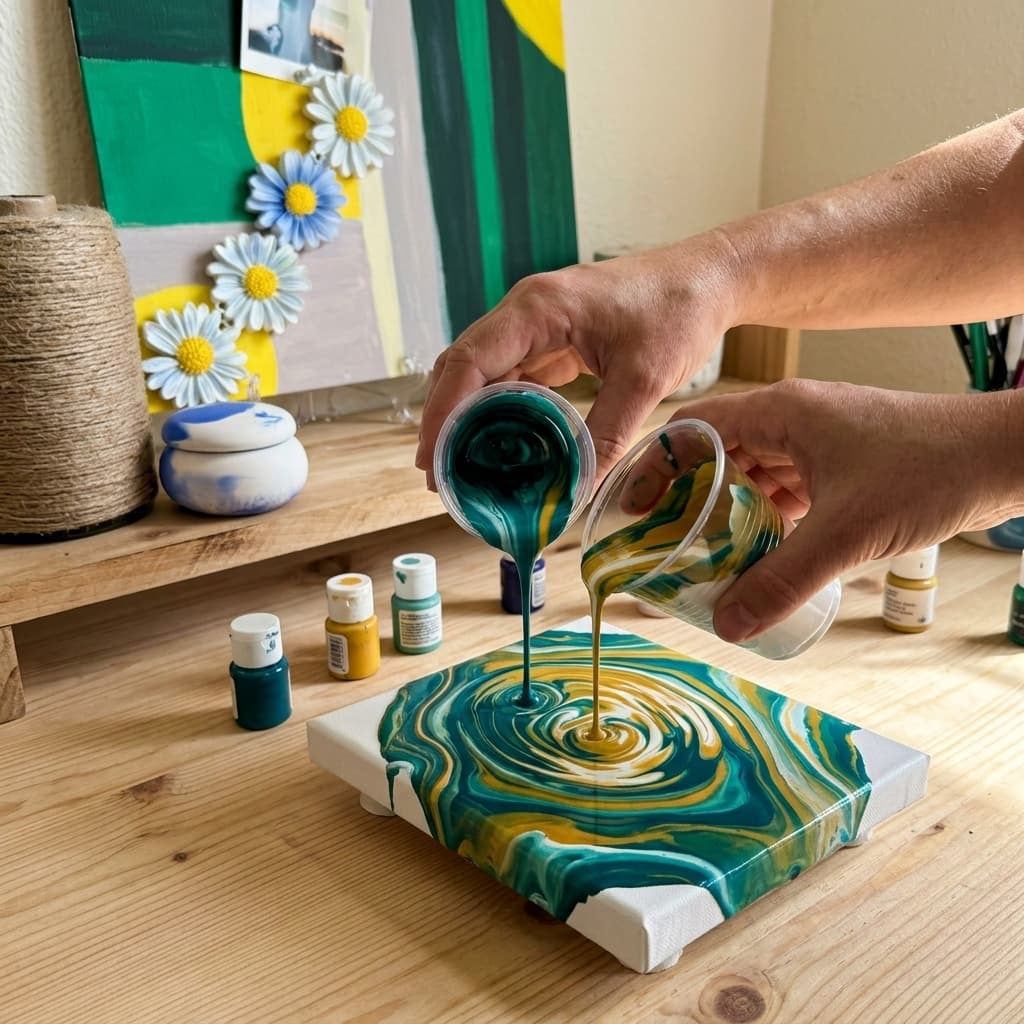
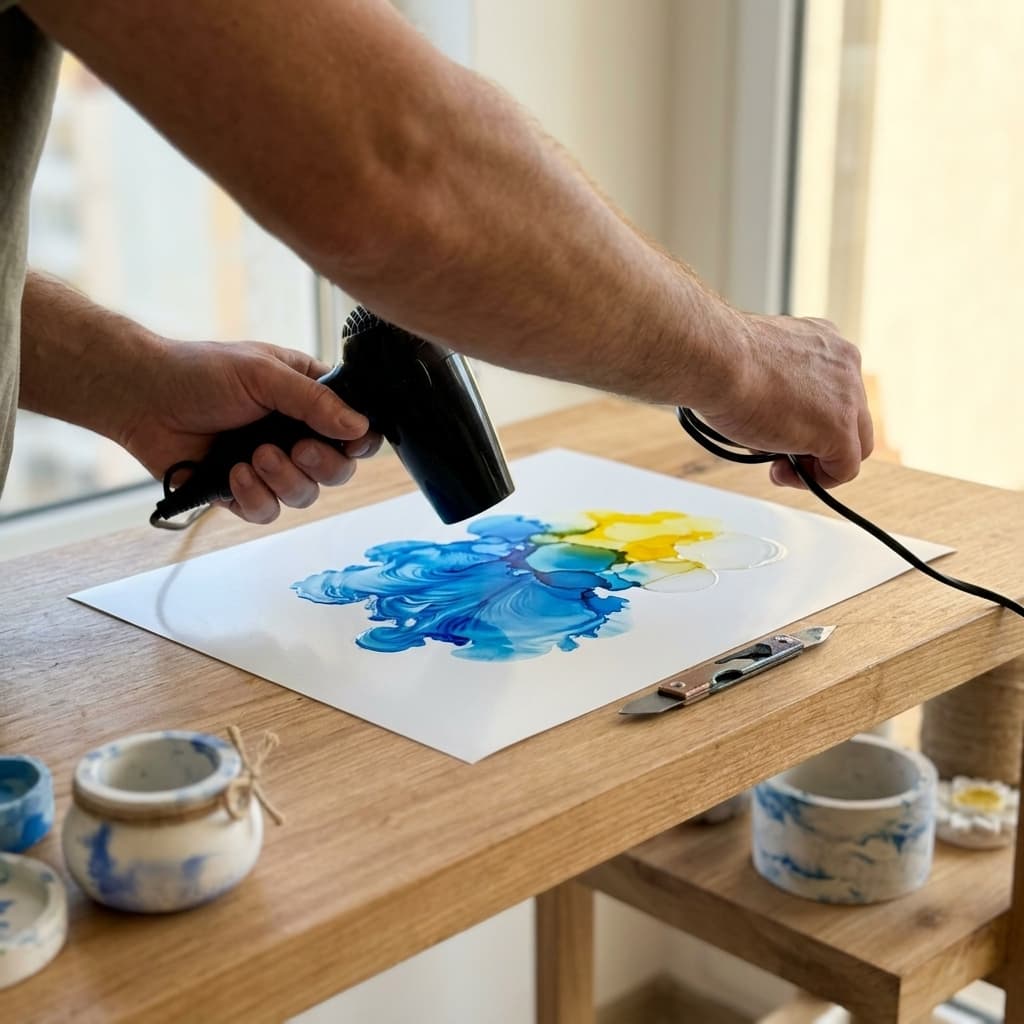
3. "Pouring Emotions" (Fluid Art approach)
Take acrylic paints, dilute with water, and pour them onto paper. Watch how the streams mix. This technique is easily reproduced at our Fluid Art master class.
4. "Wish Collage"
Cut out images from magazines that attract you and arrange them on a sheet. This is goal visualization through creativity—a powerful tool in coaching and psychotherapy.
5. "Sculpting Feelings"
Take clay or gypsum and sculpt what you feel. Not a figure, but the sensation itself. Anger can become a spiked ball, joy a wavy shape. This works because tactile sensations are directly linked to the brain's emotional centers.
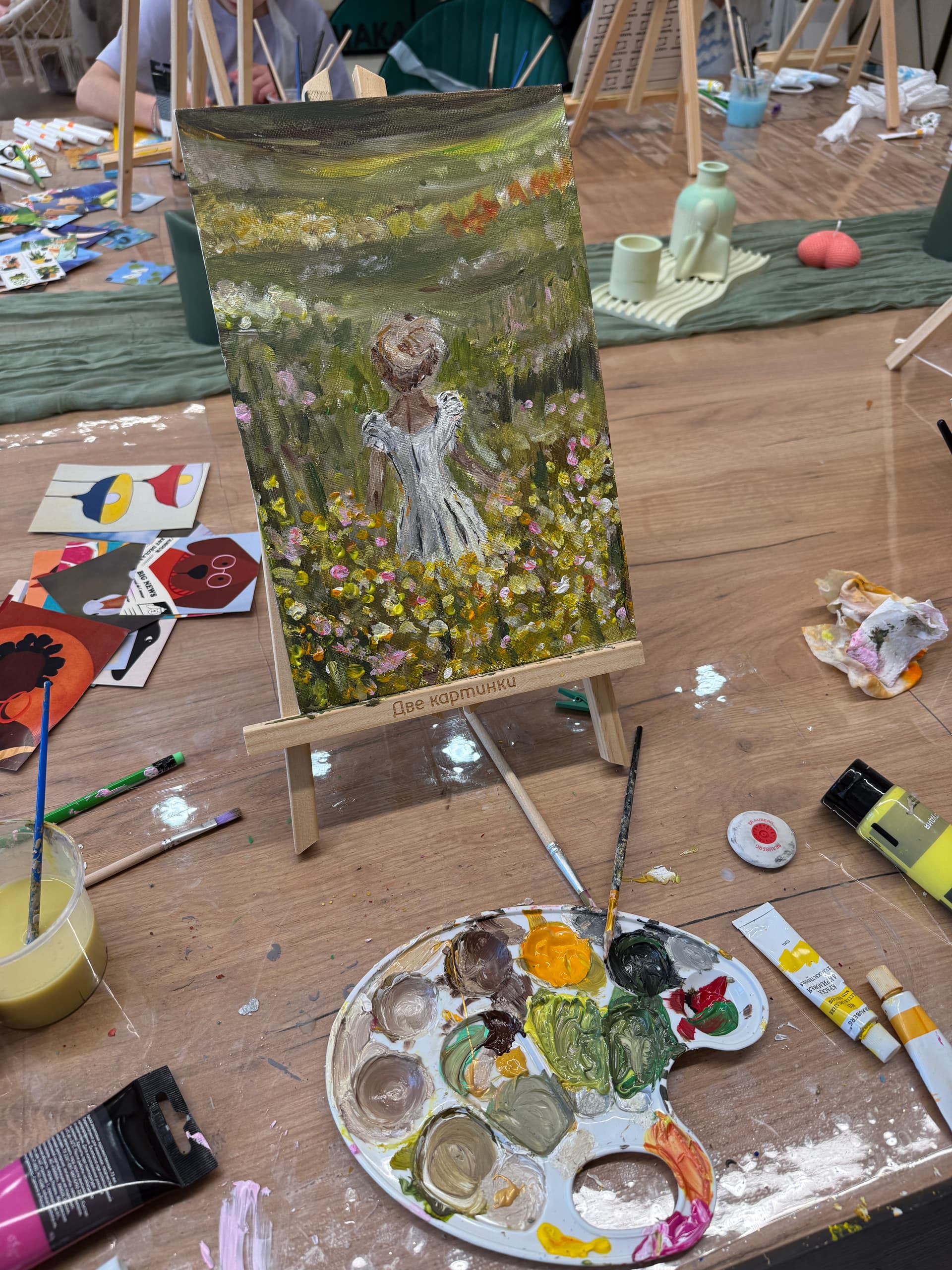
How does an "art healing" session go at MAKA Art?
We are not a clinic, we are a space of freedom. We have no grades. No one will tell you: "You drew the tree wrong." In our space, everything is right.
You arrive, put on an apron (your "protective armor"), choose materials, and dive into the process to pleasant music. The master delicately guides you, helping to realize any idea. After three hours, you emerge a different person—renewed, calm, and with a beautiful painting under your arm.
MAKA Art is an art studio in central Minsk — 61 Novovilenskaya St., unit 337. Directions are on the contacts page; pick a date on the booking page.
Frequently Asked Questions
Do I need to know how to draw for art therapy?
No! In art therapy, the result is not important—the process is. You are not creating a masterpiece for a museum, you are expressing your emotions. Techniques like Fluid Art require no drawing skills at all.
How often should I attend?
Even a single master class provides a noticeable effect. For lasting results, psychologists recommend regular creative sessions. Some of our guests make a ritual of it: they come back for a new technique whenever they feel it's time to reset.
Is art therapy suitable for depression?
Art therapy is an additional tool, not a replacement for treatment. For clinical depression, always consult a doctor. But as a way to support your emotional health, it works wonderfully.
Can I come with my child?
Yes. The studio is booked entirely for you, so you can come as a family: your child works on a kids' master class, you on yours, and the master guides both. Children are welcome from age 6. Easier than finding a babysitter.
Try it yourself
Don't just take our word for it. Come and check the effect on yourself. Look at our available master classes and choose a date for your reboot. Or give an emotion certificate to a loved one.
Pick a format and a date — book online or message us.